Towed by Wednesday, Blocked by Friday: Malé's Parking Standoff Has No Off Switch
The capital can clear its footpaths in a single afternoon. Keeping them clear is the part the system keeps failing and a cycle of fines, forgiveness and forgetting is the reason why.
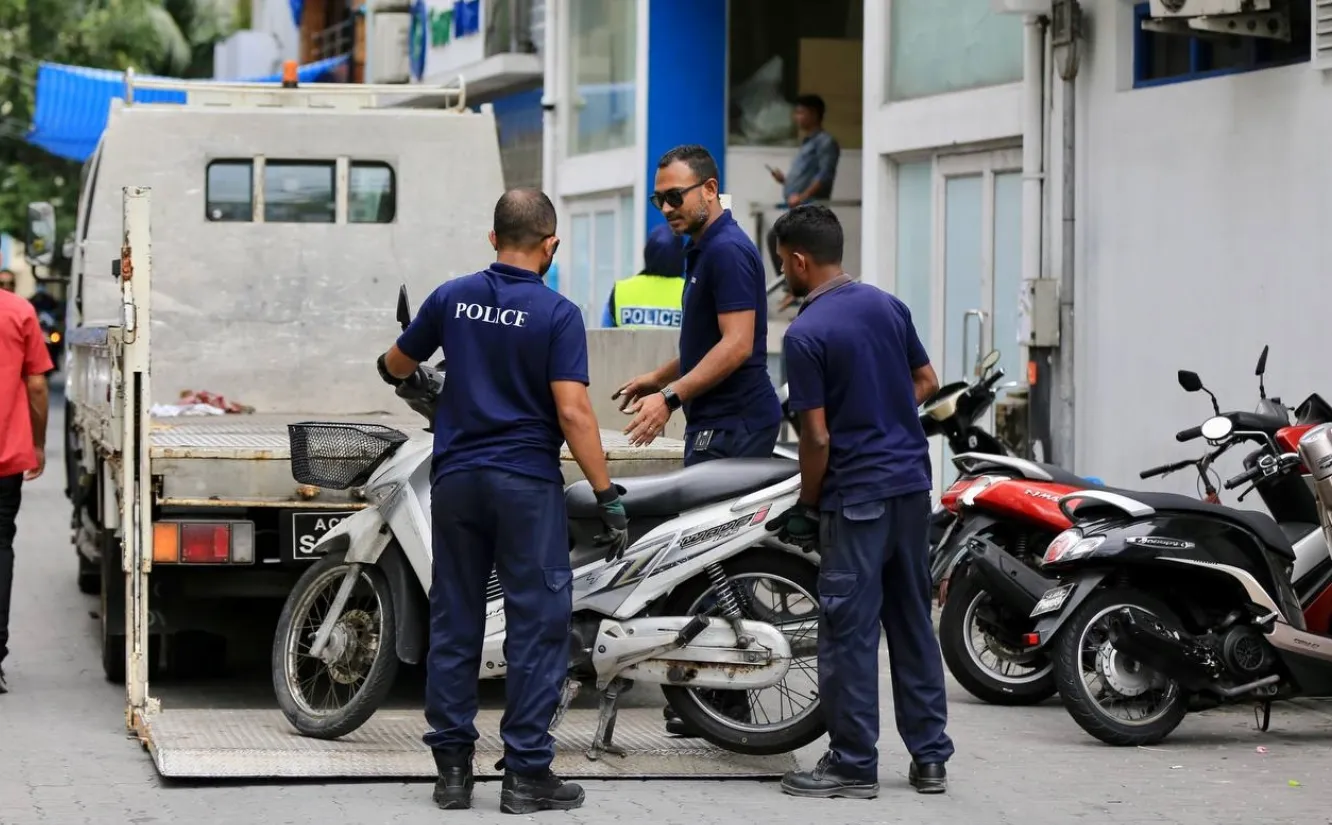
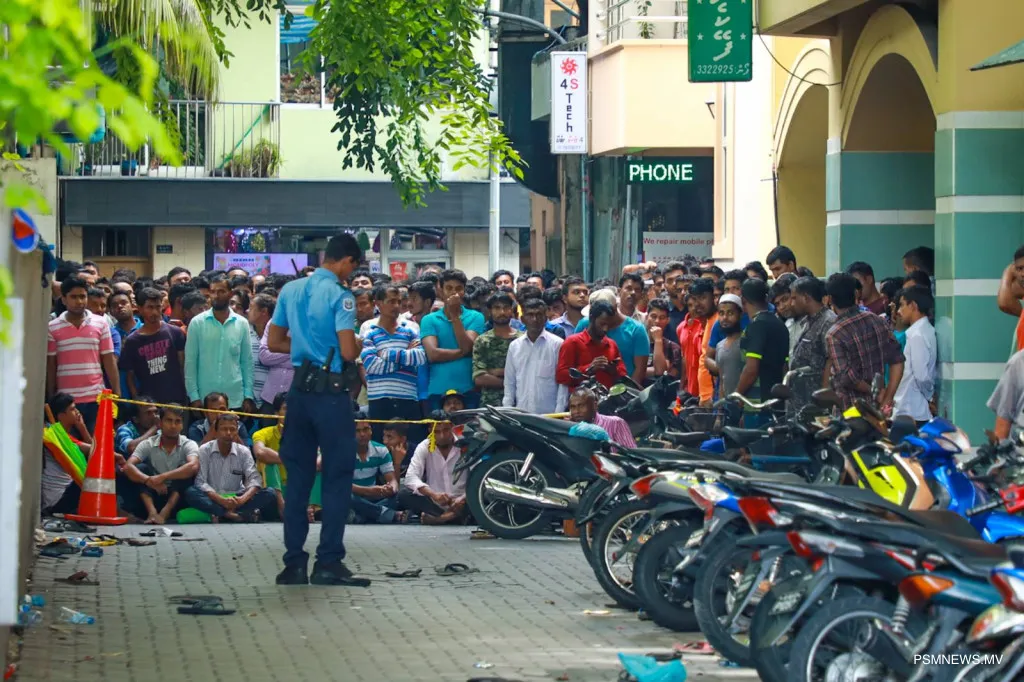
On Wednesday, 18 June, police tow trucks went to work down Majeedhee Magu and along Ameenee Magu hauling away 72 motorcycles in a single day; a burst of enforcement aimed at the illegal parking that has been choking the capital's main roads for years.
For a few days pedestrians could see the pavement again. By the weekend, the bikes were back.
That is the rhythm of parking in Malé; a cycle of crackdowns on parking violations, a clearing, followed by a slow refilling of every footpath and junction until the next operation arrives to restart the cycle. The problem is not a shortage of tow trucks. It is the lack of enforcement in the system and an unfortunate feature of Maldivian politics that resets the board preventing sustained improvement in road etiquette.
A city that ran out of room
Malé packs one of the densest populations on earth onto less than six square kilometres of land. A March 2025 assessment by the Islamic University of Maldives, commissioned to advise on vehicle limits, counted roughly 119,000 vehicles in the Greater Malé Region, about 103,300 of them motorcycles, broadly in line with the Transport Ministry's tally of some 116,000 vehicles registered in the capital by the end of 2023.
By that point, vehicles occupied 82 per cent of road space in the Malé region, leaving just 18 per cent for people on foot, according to figures reported by Corporate Maldives. The same IUM study found more than three in five vehicles (71,868 of them) operating without valid roadworthiness certification, and recorded 16,242 road accidents over five years, most involving motorcycles.
Curiously, the city is not short of bays. On paper, Malé and Hulhumalé together hold about 132,230 motorcycle slots and 7,163 car slots, more parking than there are vehicles. The gridlock, the IUM report argues, is one associated with location, not supply. The bays cluster near homes mwhile the demand sits near mosques, markets, schools and shopfronts. So drivers stop where they are going, double-park at the destination, and the footpath behind them vanishes.
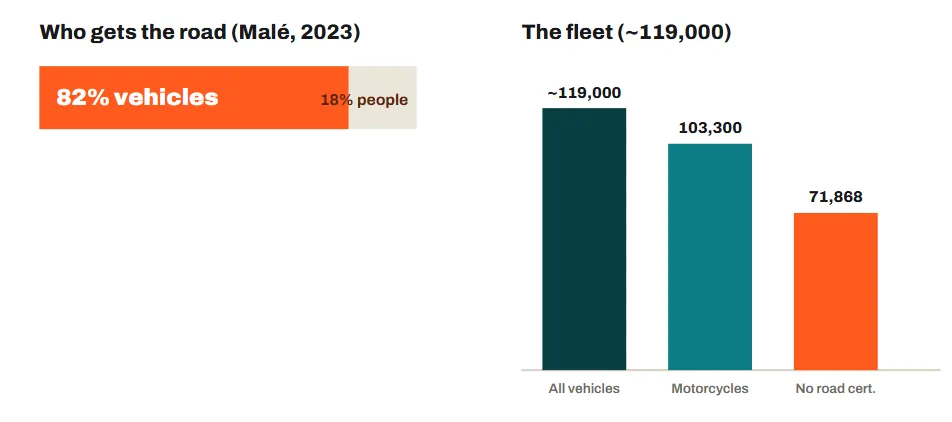
[Graphic] Source: Islamic University of Maldives, Assessment to Determine Vehicle Restrictions in the Greater Malé Region (March 2025)
When the stickers stopped
For years, a small white violation sticker slapped on a windscreen was the closest thing Malé had to a parking conscience: move, or risk the tow. Then, under President Mohamed Muizzu, the government signalled it would ease off. Ali Shujau, appointed Commissioner of Police in December 2023, indicated that stickering and towing would halt until more parking was built, with police instead phoning owners to move obstructing vehicles.
Ahmed 32, who works at government office said t's very difficult to ride a motorbike in Malé because there are so many vehicles parked illegally and some of them block the roads completely.
Sometimes we have to wait more than ten minutes in traffic just for someone to come and move the vehicle,
The pause however, did not hold, and the towing operations resumed, as June's crackdown shows. Under article 14(b) of the Road Traffic Act, illegal parking carries a MVR 750 fine, except where a sticker has been issued, the very carve-out police had said they would not press.
The forgiveness trap
Where Malé's parking problem stops being about footpaths and starts being about follow-through is that a fine only deters if it is eventually paid; however, in the Maldives, the bill has a habit of being torn up.
Unpaid traffic fines routinely pile up. The accumulation is large enough that the Land Transport Act was amended in 2020 to let the Maldives Inland Revenue Authority seek court orders for community service once a person's fines pass MVR 10,000; an admission, written into law, that ordinary penalties were not being collected. And periodically, the slate is simply wiped. Ahead of the September 2018 presidential election, the Yameen administration waived traffic fines worth more than MVR 7.8 million, a move the opposition condemned as buying votes with forgiveness.
That is the trap. Enforcement tightens; fines accumulate; an election or a new term arrives; the debts are pardoned or quietly abandoned; the deterrent resets to zero. Every driver who has watched a balance vanish before learns the rational lesson, that a sticker is a suggestion, and patience beats payment. No towing operation, however vigorous, can outrun a system that forgives faster than it fines.
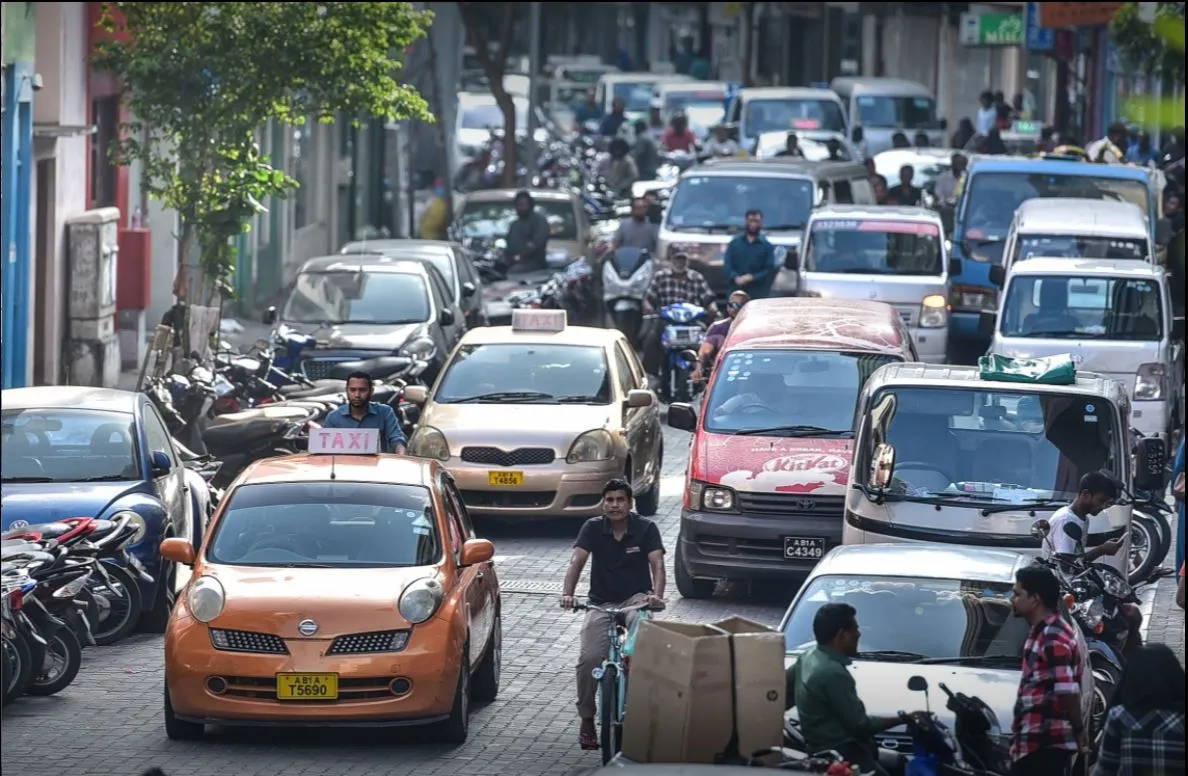
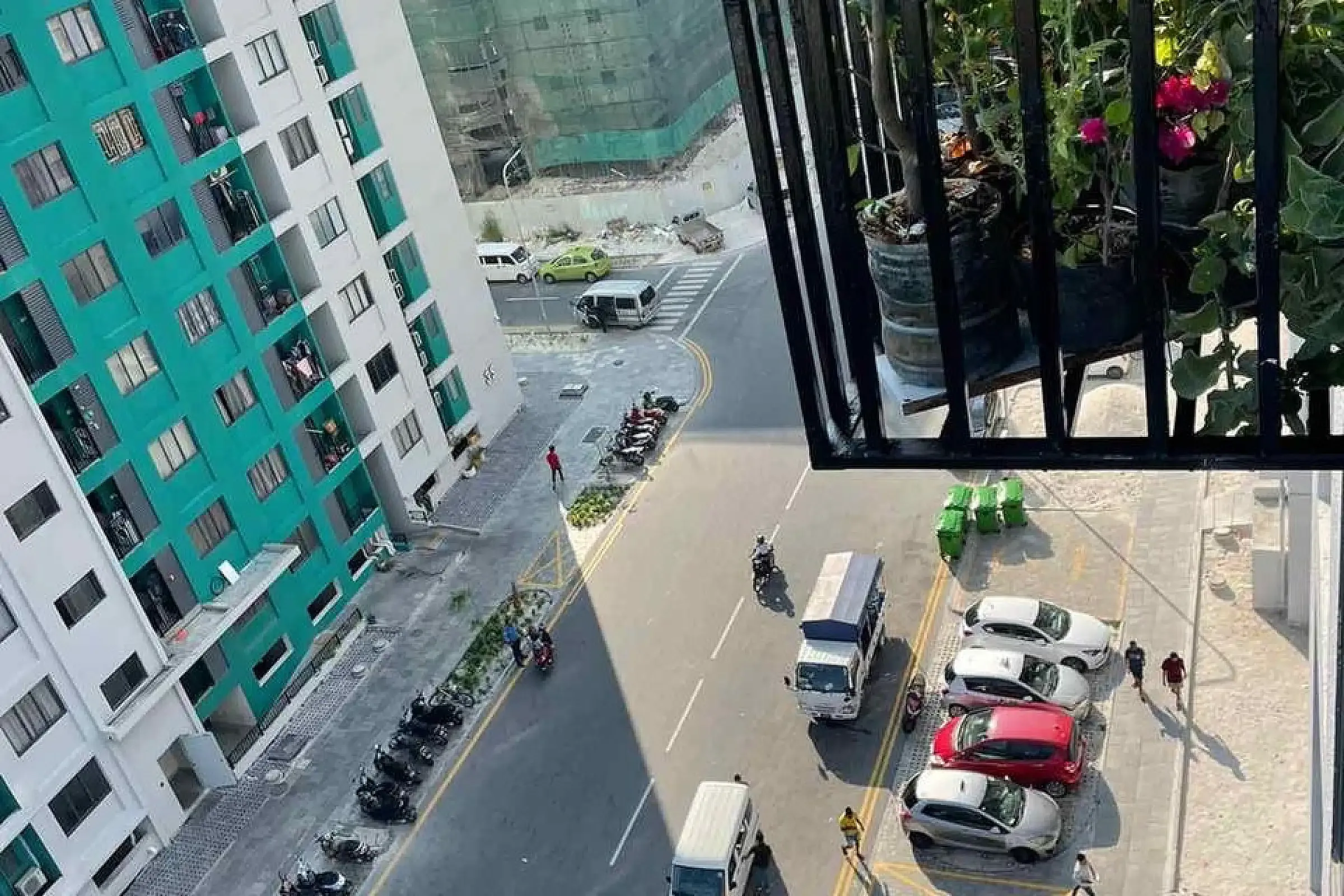
Taxis, vans, motorcycles, and a cyclist navigate a congested street in Malé, where rows of parked motorbikes line the roadside and vehicles compete for space -- Photo: Nishan Ali / Mihaaru
Would a wheel lock break the cycle?
Some residents and officials favour a harder, steadier deterrent: clamping vehicles left in restricted places , a wheel lock, or "disc lock", paired with round-the-clock towing. Clamps have been a parking-enforcement staple since Denver police first fitted one in 1955: cheap, simple, and immediate.
But a clamp alone changes the wrong thing. It immobilises the vehicle while leaving it exactly where it sits, so the obstruction stays put. The clamp disciplines the driver; only the tow clears the road. The answer is not to choose between them but to run both, consistently, predictably, and without the periodic amnesty that teaches everyone to wait it out. A clamp the driver knows will come, and a fine the driver knows will be collected, would do more than any one-day blitz of 72 bikes.
Who pays the toll
When footpaths disappear, the cost lands on the people least able to dodge it; older residents, parents pushing strollers, wheelchair users, and children walking to school. Push them into the carriageway as the IUM report warns and you push them precisely where the accident risk is highest. In a city this dense, the footpath is not a convenience, it is the main pedestrian network, and a necessity for one of the most vulnerable groups.
The white sticker was never going to fix Malé's congestion by itself. But its disappearance, and the forgiveness that follows every fine, told drivers the rules don't really count. Restoring consistent enforcement, sticker, fine, clamp or tow, may matter less for the revenue it raises than for the expectation it sets that a footpath is for walking, and a penalty is meant to be paid. Until that holds through more than one electoral cycle, the capital will keep negotiating its narrow streets one blocked corner at a time towed by Wednesday, blocked by Friday, and back to the start by the time anyone notices.
Author
Leevaan Ali Nasir
Leave a comment
Comments
No comments yet. Be the first to comment!